
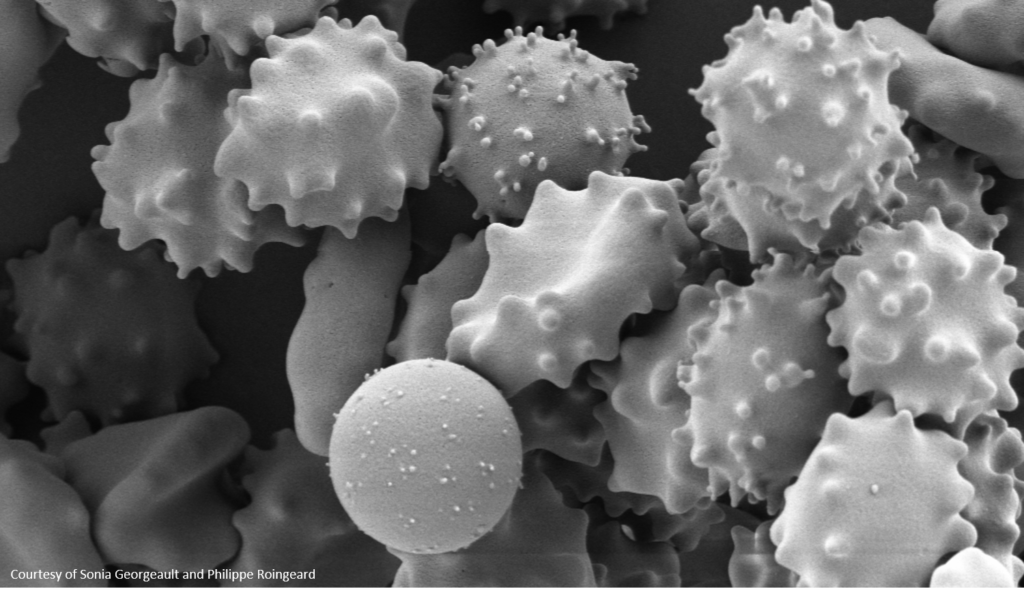
The mature red blood cell: a cellular model to study age-related protein quality control dysfunction
Proteins in mature, organelle-devoid RBCs experience oxidative damage during their lifespan; however, they cannot synthesize new proteins to replace damaged components. This observation is particularly relevant in the pathophysiological context of beta-thalassemia, where misfolded toxic alpha-globin chains accumulate leading to reduced circulation quality in vivo. Also, in transfusion medicine, donated RBCs prematurely age in vitro during refrigerated storage leading to reduced storage quality. Therefore, protein quality control mechanisms (e.g., amino acid repair, chaperone-mediated refolding, proteasomal degradation) enable RBCs to respond to these attacks and determine their fate. In particular, because ATP fuels protein quality control, RBCs must maintain ATP levels. Building on our novel findings regarding proteasomal function in RBC biology (Peltier, Marin et al., Journal of Clin Invest, 2025), we will study interactions between oxidative damage and protein quality control mechanisms in RBCs, in vivo and in vitro. Leveraging these findings will identify novel ways to maintain and improve RBC properties with the long-term goals of improving transfusion efficacy and reducing hemolysis in the physio-pathological context of beta-thalassemia.